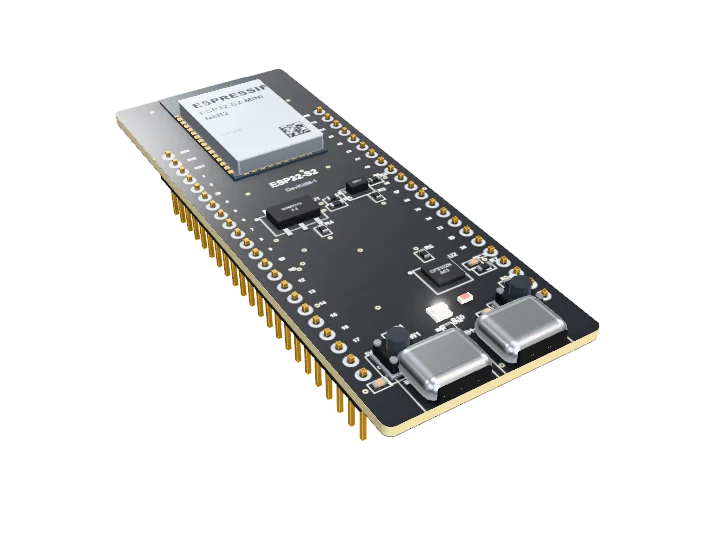
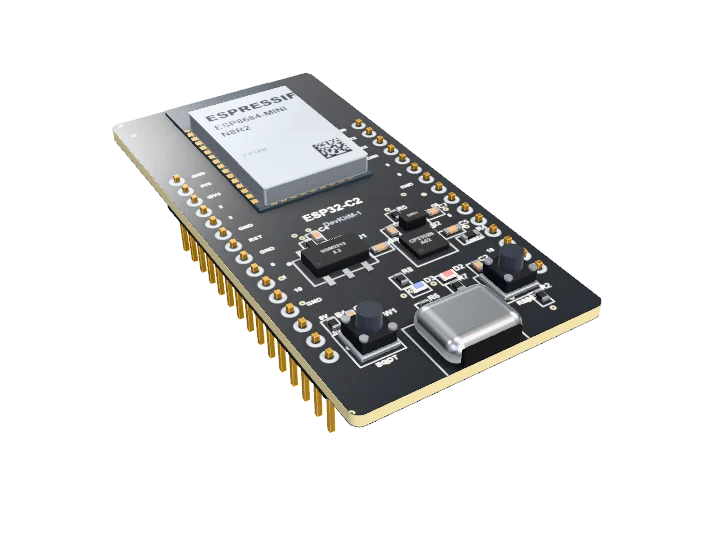
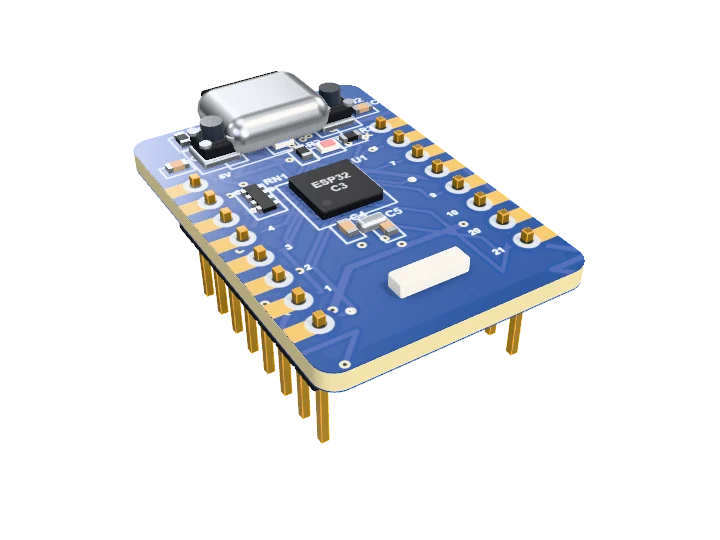
ESP32-C3 SuperMini simulator
Simulate the ESP32-C3 SuperMini (ESP32-C3, 160 MHz) online: Arduino IDE, ESP-IDF projects with parts on a bench, free in your browser. It runs on the Lab's virtual board (labelled Lab virtual); ESP32 sketches can also run their real firmware in Espressif's QEMU, with the serial port and output pins.
- Chip
- ESP32-C3
- Clock
- 160 MHz
- Family
- ESP32
- Write it in
- Arduino IDE, ESP-IDF
- Runs on
- the Lab's virtual board (labelled Lab virtual); ESP32 sketches can also run their real firmware in Espressif's QEMU, with the serial port and output pins
- Wi-Fi
- Wi-Fi 4
- Bluetooth
- BLE 5 (not simulated)
Examples for ESP32 boards
They run on this board too: open one and change the board.
Two ESP32s over ESP-NOW
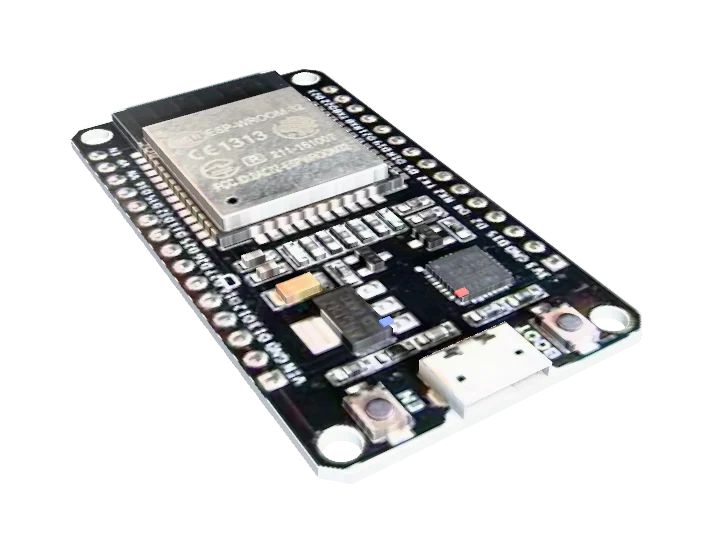
ESP32 1 sends its button over ESP-NOW to every board (FF:FF:FF:FF:FF:FF); ESP32 2 lights its LED while it is held. Each board prints its own MAC: to send to one board, put its MAC in the sender (or set the receiver’s MAC in its settings).
Two ESP32s over Bluetooth LE
ESP32 1 is a BLE server with a knob, notified to whoever subscribes; ESP32 2 scans for its service, connects, subscribes, and dims its LED to the knob. The bench’s phone can connect to ESP32 1 too.
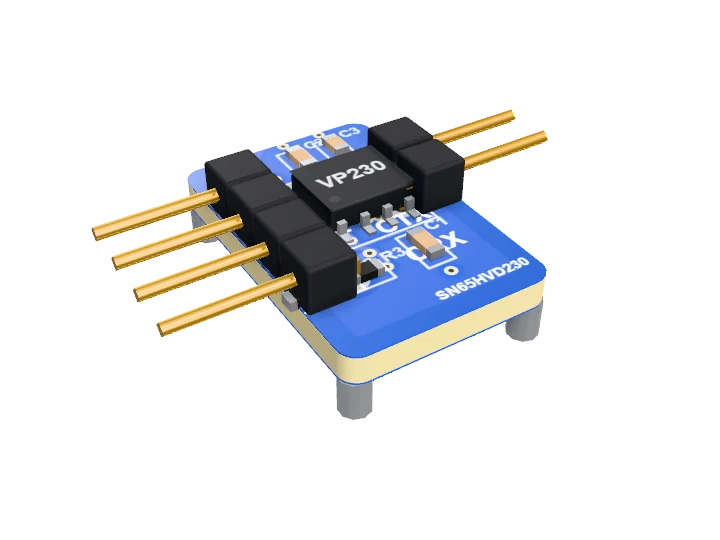
ESP32 TWAI and Uno MCP2515 on CAN
The ESP32’s own CAN controller (TWAI, driver/twai.h) through an SN65HVD230 transceiver, and an Uno with an MCP2515, on one pair at 500 kbit/s. The ESP32 sends its knob; the Uno dims its LED to it and answers how many it has had.
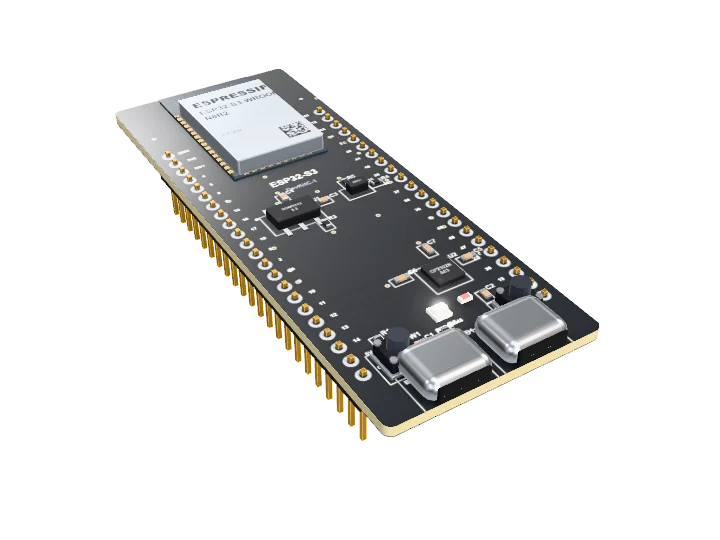
ESP32-S3: RGB LED
The S3 DevKitC-1’s own RGB LED (GPIO48) through the colours with rgbLedWrite().
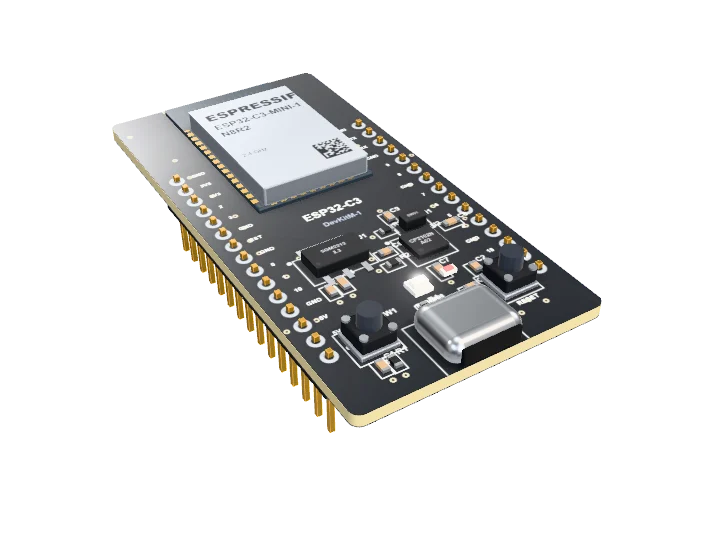
ESP32-C3: button and RGB LED
A button on GPIO 4 steps the C3 DevKitM-1’s RGB LED through colours.
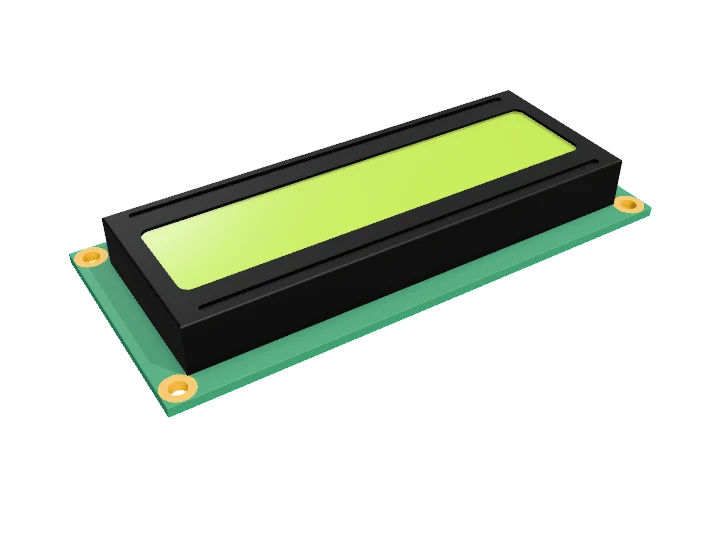
ESP32-H2: LCD, no Wi-Fi
The H2 has BLE and Thread, no Wi-Fi: an I2C LCD on SDA 12, SCL 22 counts up.