MicroPython simulator on the real Raspberry Pi Pico
Argynix Lab runs MicroPython in your browser: MicroPython's own firmware on an emulated Raspberry Pi Pico, the real RP2040. Write main.py, press Run and it starts at once; there is no build. The REPL is in the console.
machine.Pin, ADC, PWM, SPI and Timer, rp2 and PIO, neopixel, time, asyncio and framebuf are simulated against the parts on the bench, with I2C, UART and files in part.
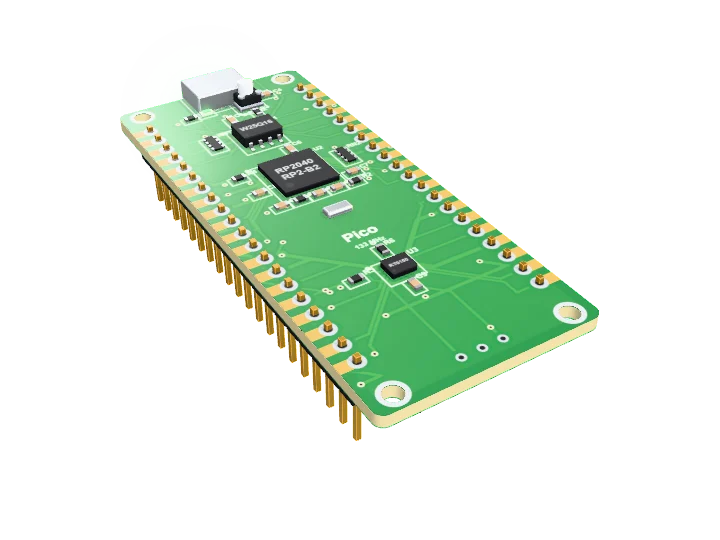
Boards (1)
Each says whether it runs the exact chip or the Lab's virtual board.
Examples that run as they open
MicroPython: blink
MicroPython’s own firmware on the real RP2040: the LED blinks, the board prints. No build.
MicroPython: button and LED
A button on GP14 toggles an LED on GP15 through an interrupt.
MicroPython: knob dimmer
A potentiometer on GP26 sets an LED’s brightness on GP15 with PWM.
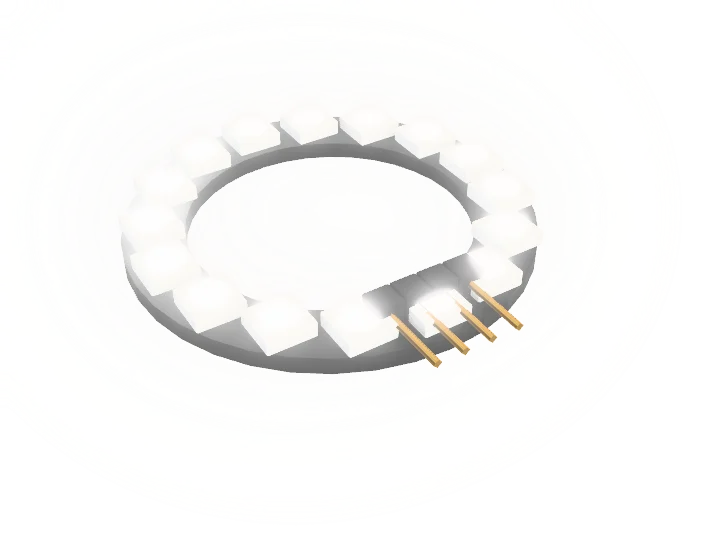
MicroPython: NeoPixel ring
A colour runs round a 16-pixel ring on GP16, with the neopixel module.
MicroPython: PIO, a WS2812 driver in four instructions
A PIO program written in Python drives a 16-pixel ring: the RP2040’s own state machine shifts out every bit.
What MicroPython code can use
Simulated works against the parts on the bench; partly runs with the limit noted; not simulated stops the build and says so.
| Library | What it does | In the Lab |
|---|---|---|
Pin from machine import Pin | GPIOs in and out, pulls, interrupts (irq), the LED as Pin("LED"). | Simulated |
ADC from machine import ADC | GP26 to GP28 (ADC 0 to 2) read the circuit’s volts. | Simulated |
PWM from machine import PWM | Duty and frequency on any pin: an LED dims, a buzzer sounds, a servo turns. | Simulated |
I2C from machine import I2C | Both blocks reach the bench’s I2C parts. | Partly |
SPI from machine import SPI | To the parts on the pins the program gives SPI: a TFT, a MAX7219, an SD card. | Simulated |
UART from machine import UART | UART0 to the Serial page. | Partly |
Timer from machine import Timer | Periodic and one-shot callbacks. | Simulated |
rp2 and PIO import rp2 | PIO programs on the state machines: a NeoPixel strip, a custom protocol. | Simulated |
neopixel from neopixel import NeoPixel | WS2812 strips and rings, their bits timed by machine.bitstream. | Simulated |
time import time | sleep, sleep_ms, ticks_ms and ticks_diff. | Simulated |
asyncio import asyncio | Coroutines and tasks. | Simulated |
framebuf import framebuf | Drawing into a buffer for a display. | Simulated |
os and files import os | The flash filesystem: the project’s other files are on it, to import or open. | Partly |
network (Wi-Fi) import network | Not on the Pico: Wi-Fi is the Pico W’s, whose radio is not emulated. | Not simulated |
Questions
Do I need to flash MicroPython first?
No. The Pico on the bench already runs MicroPython; write main.py and press Run, or type into the REPL.
Can I put the same code on a real Pico?
Yes. With Chrome or Edge, the Lab writes main.py to a real Pico running MicroPython over USB.
Is Argynix Lab free?
Yes. Every board, part and example is free to use, without an account; your projects stay in your browser. A free ARGYNIX account keeps up to 10 projects in the cloud. The Pro and Team plans add more projects and saved versions, private sharing and priority builds.
Can I flash a real board from the browser?
Yes. With Chrome or Edge on a computer, the Lab writes the program to a real Arduino, ESP32, STM32 or Raspberry Pi Pico over USB (Web Serial), or saves a UF2 file for the Pico.
Is Argynix Lab an alternative to Wokwi or Tinkercad Circuits?
Yes, it is in the same family: it simulates microcontroller projects in the browser. What the Lab brings: Arduino, ESP-IDF, STM32 HAL and MicroPython projects in one place, exact AVR and RP2040 chips, a 3D bench, flashing a real board from the browser, and a running project that sends readings to ARGYNIX Cloud.