ESP-IDF: Wi-Fi station to the cloud
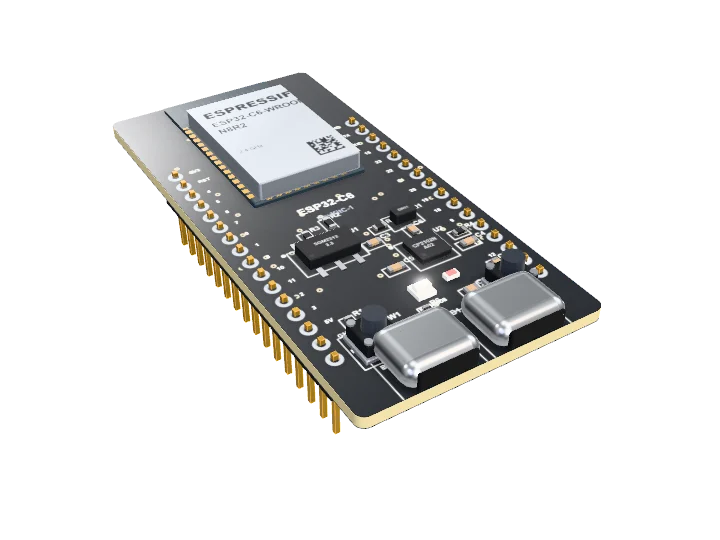
ESP-IDF’s station example on the C6, then readings to ARGYNIX Cloud and its RGB LED from Connect.
The code
/* Wi-Fi station, as ESP-IDF's wifi/getting_started/station example, then live in
   ARGYNIX Cloud: the uptime and RSSI every 5 s, and a switch in Connect sending
   "setLed" (true/false) lights the C6's RGB LED. Link the project from Live in Cloud. */
#include <string.h>
#include "freertos/FreeRTOS.h"
#include "freertos/task.h"
#include "freertos/event_groups.h"
#include "esp_system.h"
#include "esp_wifi.h"
#include "esp_event.h"
#include "esp_log.h"
#include "nvs_flash.h"
#include "led_strip.h"
#include "argynix_cloud.h"

#define WIFI_CONNECTED_BIT BIT0
#define WIFI_FAIL_BIT      BIT1

static const char *TAG = "wifi station";
static EventGroupHandle_t s_wifi_event_group;
static int s_retry_num = 0;
static led_strip_handle_t led;

static void event_handler(void *arg, esp_event_base_t event_base, int32_t event_id, void *event_data)
{
    if (event_base == WIFI_EVENT && event_id == WIFI_EVENT_STA_START) {
        esp_wifi_connect();
    } else if (event_base == WIFI_EVENT && event_id == WIFI_EVENT_STA_DISCONNECTED) {
        if (s_retry_num < CONFIG_ESP_MAXIMUM_RETRY) {
            esp_wifi_connect();
            s_retry_num++;
            ESP_LOGI(TAG, "retry to connect to the AP");
        } else {
            xEventGroupSetBits(s_wifi_event_group, WIFI_FAIL_BIT);
        }
    } else if (event_base == IP_EVENT && event_id == IP_EVENT_STA_GOT_IP) {
        ip_event_got_ip_t *event = (ip_event_got_ip_t *)event_data;
        ESP_LOGI(TAG, "got ip:" IPSTR, IP2STR(&event->ip_info.ip));
        s_retry_num = 0;
        xEventGroupSetBits(s_wifi_event_group, WIFI_CONNECTED_BIT);
    }
}

static void on_command(const char *method, const char *params)
{
    if (strcmp(method, "setLed") == 0) {
        bool on = strcmp(params, "true") == 0 || strcmp(params, "1") == 0;
        if (on) led_strip_set_pixel(led, 0, 0, 40, 255);
        else led_strip_set_pixel(led, 0, 0, 0, 0);
        led_strip_refresh(led);
        argynix_cloud_add_bool("led", on);
        argynix_cloud_publish();
    }
}

void app_main(void)
{
    ESP_ERROR_CHECK(nvs_flash_init());
    led_strip_config_t strip = { .strip_gpio_num = 8, .max_leds = 1 };
    led_strip_rmt_config_t rmt = { .resolution_hz = 10 * 1000 * 1000 };
    ESP_ERROR_CHECK(led_strip_new_rmt_device(&strip, &rmt, &led));

    s_wifi_event_group = xEventGroupCreate();
    ESP_ERROR_CHECK(esp_netif_init());
    ESP_ERROR_CHECK(esp_event_loop_create_default());
    esp_netif_create_default_wifi_sta();
    wifi_init_config_t cfg = WIFI_INIT_CONFIG_DEFAULT();
    ESP_ERROR_CHECK(esp_wifi_init(&cfg));

    esp_event_handler_instance_t instance_any_id;
    esp_event_handler_instance_t instance_got_ip;
    ESP_ERROR_CHECK(esp_event_handler_instance_register(WIFI_EVENT, ESP_EVENT_ANY_ID, &event_handler, NULL, &instance_any_id));
    ESP_ERROR_CHECK(esp_event_handler_instance_register(IP_EVENT, IP_EVENT_STA_GOT_IP, &event_handler, NULL, &instance_got_ip));

    wifi_config_t wifi_config = {
        .sta = {
            .ssid = CONFIG_ESP_WIFI_SSID,
            .password = CONFIG_ESP_WIFI_PASSWORD,
            .threshold.authmode = WIFI_AUTH_WPA2_PSK,
            .sae_pwe_h2e = WPA3_SAE_PWE_BOTH,
            .sae_h2e_identifier = "",
        },
    };
    ESP_ERROR_CHECK(esp_wifi_set_mode(WIFI_MODE_STA));
    ESP_ERROR_CHECK(esp_wifi_set_config(WIFI_IF_STA, &wifi_config));
    ESP_ERROR_CHECK(esp_wifi_start());
    ESP_LOGI(TAG, "wifi_init_sta finished.");

    EventBits_t bits = xEventGroupWaitBits(s_wifi_event_group, WIFI_CONNECTED_BIT | WIFI_FAIL_BIT, pdFALSE, pdFALSE, portMAX_DELAY);
    if (bits & WIFI_CONNECTED_BIT) {
        ESP_LOGI(TAG, "connected to ap SSID:%s", CONFIG_ESP_WIFI_SSID);
    } else {
        ESP_LOGI(TAG, "Failed to connect to SSID:%s", CONFIG_ESP_WIFI_SSID);
        return;
    }

    argynix_cloud_start(on_command);
    for (int seconds = 0;; seconds += 5) {
        int rssi = 0;
        esp_wifi_sta_get_rssi(&rssi);
        argynix_cloud_add_int("uptime", seconds);
        argynix_cloud_add_int("rssi", rssi);
        argynix_cloud_publish();
        vTaskDelay(pdMS_TO_TICKS(5000));
    }
}
More like this
ESP-IDF: blink
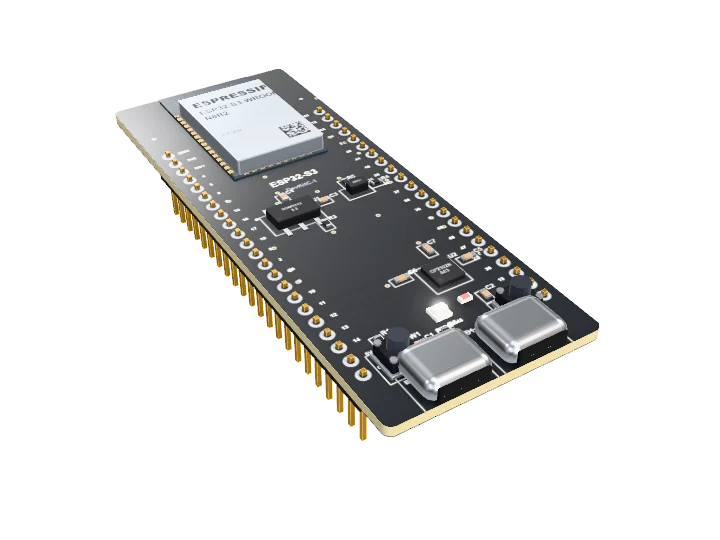
ESP-IDF’s blink example as it ships: the S3’s RGB LED through led_strip, settings from sdkconfig.h.
ESP-IDFESP32-S3 DevKitC-1
ESP-IDF: button interrupt and a queue
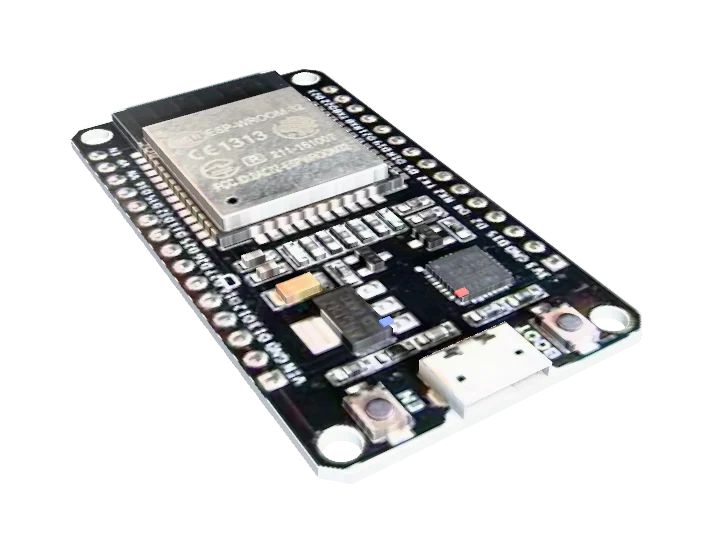
An interrupt handler feeds a FreeRTOS queue; a task counts the presses and toggles GPIO2.
ESP-IDFESP32 DevKit V1
ESP-IDF: deep sleep, RTC memory, NVS
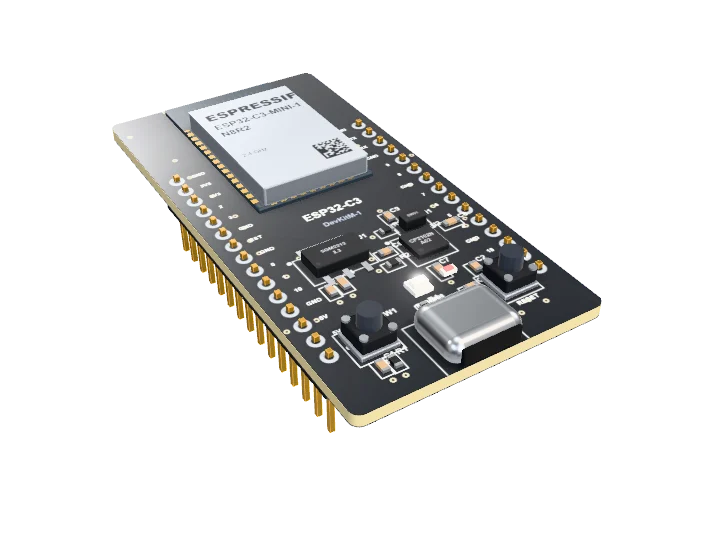
The C3 sleeps and wakes three times; RTC memory and NVS keep their counts through it.
ESP-IDFESP32-C3 DevKitM-1